
Co-processing – The preferred transition strategy for refineries

Why is co-processing gaining momentum?
Co-processing refers to the simultaneous processing of renewable or recycled feedstocks with conventional fossil feedstocks in existing refinery units, producing drop-in fuels that meet current specifications while delivering lifecycle emissions reductions. Refinery co-processing is gaining momentum today as refiners strive to remain profitable in volatile oil product markets while meeting greenhouse gas (GHG) emissions reduction targets. Sustainable aviation fuel (SAF) mandates, low-carbon fuel regulations and growing stakeholder expectations are pushing companies to act faster, even as long-term demand and pricing of renewable fuels remain uncertain. In this environment, co-processing has emerged as a practical option compared to a standalone renewable fuels plant, as it allows existing refinery units to produce renewable fuels without incurring significant CAPEX investment. Co-processing also provides operational flexibility to adjust renewable feed rates according to market and policy conditions.
Typical feedstocks for co-processing include vegetable oils, animal oils and waste oils like used cooking oil (UCO). Plastic pyrolysis oil is also becoming an increasingly relevant co-processing feedstock due to advanced recycling initiatives and circular economy goals particularly in the EU and North America. Securing a reliable, sustainable feedstock supply remains a key consideration as feedstock availability and quality can vary significantly between various sources.
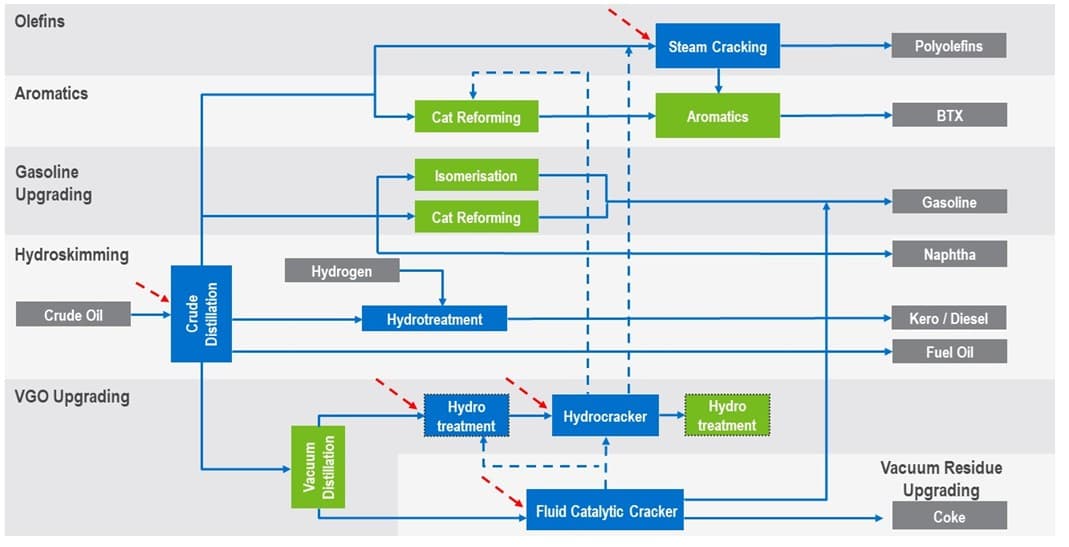
As shown in Figure 1, co-processing is typically implemented in hydrotreating units, hydrocrackers and fluidised catalytic cracking (FCC) units, though it can also be implemented upstream at the crude distillation unit, or even at the steam cracking unit. Various technical considerations - from hydrogen consumption to catalyst sensitivity and product yield impacts – need to be taken into account, as the choice of unit and process licensor can influence both operational performance and economic outcomes.
Figure 1 Common Co-processing Insertion Points in a Refinery
Policies and regulations
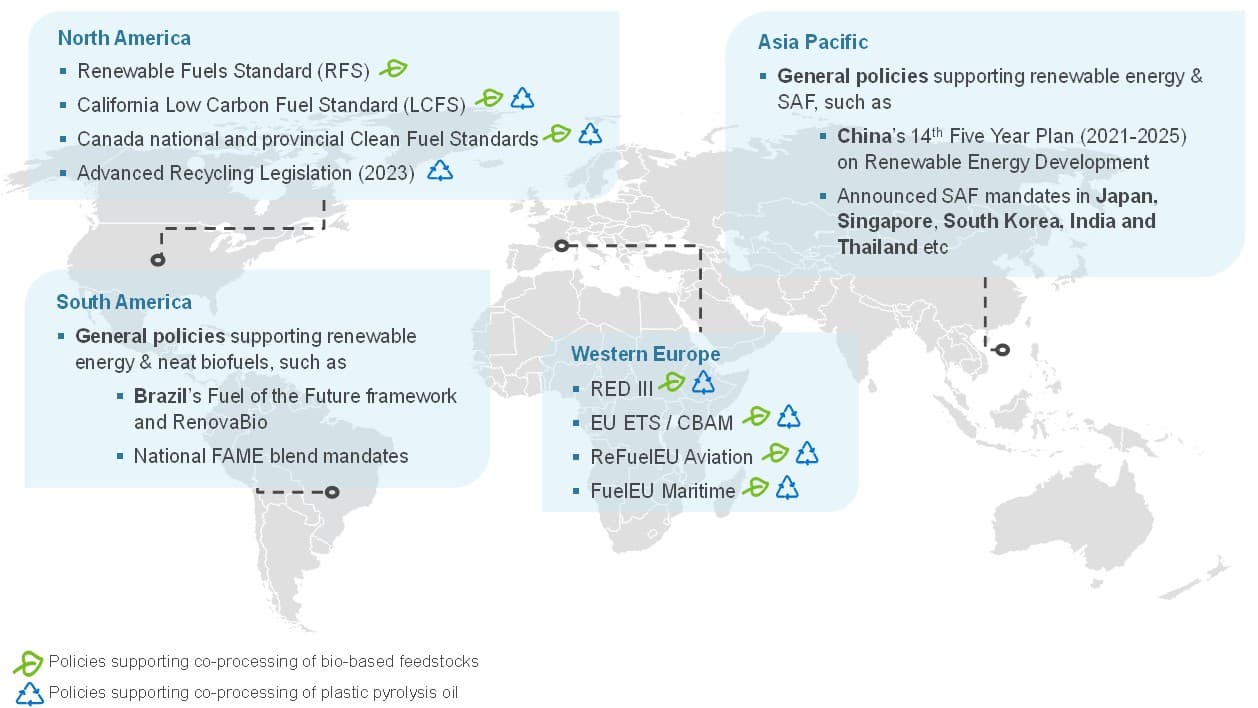
Policy and regulatory frameworks are major drivers for co-processing adoption in a particular region. As shown in Figure 2, the EU and North America are leading global renewable fuels blend mandates. These regions have established regulatory policies, such as the EU’s ReFuelEU Aviation and California’s Low Carbon Fuel Standard (LCFS), supporting demand for SAF and renewable diesel. Advanced recycling regulations in both regions also allow plastic pyrolysis oil feedstock and products to qualify toward emissions and recycling targets, provided traceability and accounting requirements are met. In Asia and South America, emerging SAF mandates are creating additional incentives for refiners to invest in renewable feedstock capabilities.
Figure 2 Policies Supporting Low Carbon Transportation Fuels
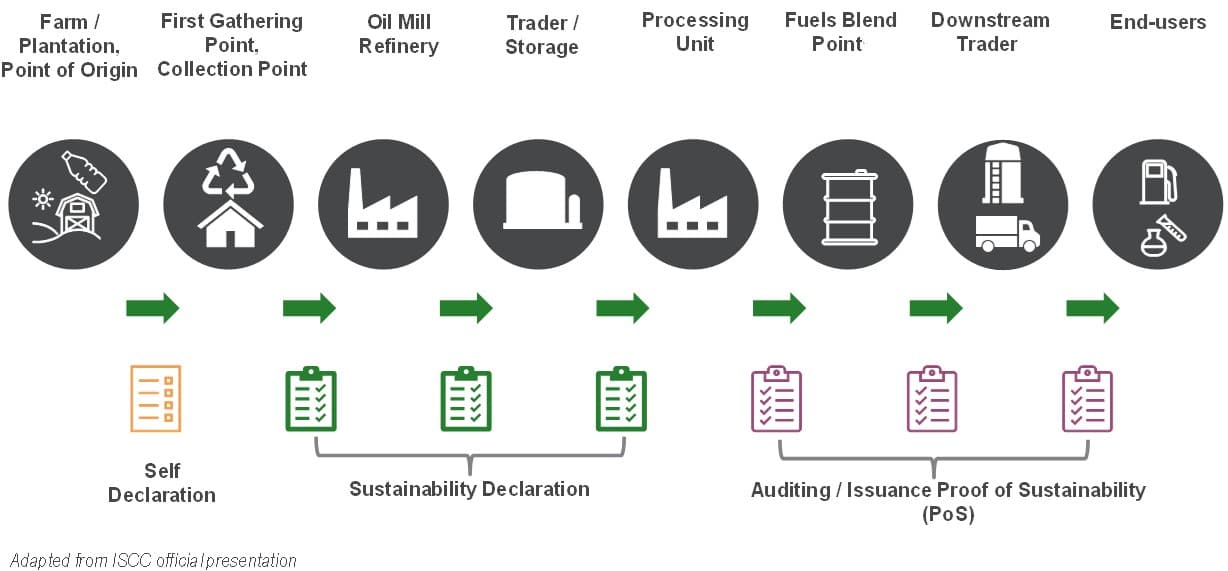
Certification schemes like International Sustainability & Carbon Certification (ISCC) provide a way to track renewable or recycled content via a mass balance approach, which is a chain-of-custody method allowing manufacturers to mix sustainable (recycled/bio-based) and conventional raw materials within existing, shared infrastructure while tracking and verifying the sustainable inputs to assign to specific outputs. As refiners integrate renewable streams, they must account for mass balance rules and documentation requirements, making it important to understand how regulatory frameworks, certification requirements and feedstock availability interact to shape co-processing economics.
Figure 3 ISCC Certification Scheme Coverage
Global co-processing capacity
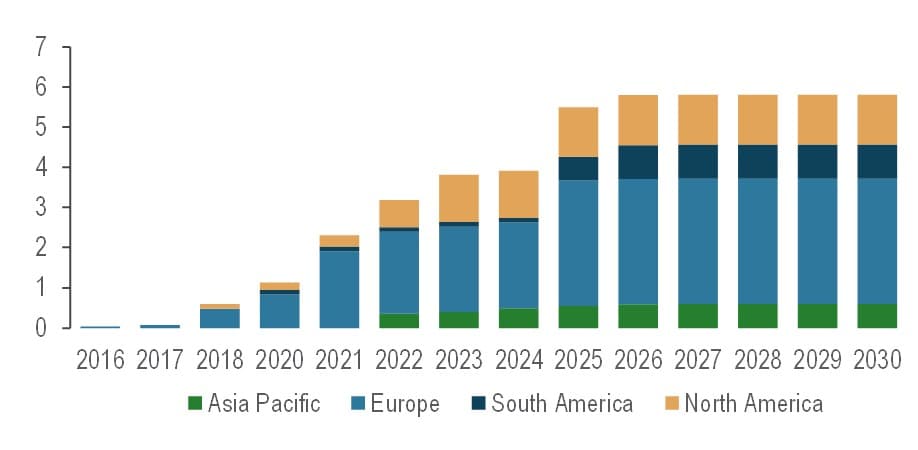
Globally, the adoption of co-processing varies across regions. The EU has the largest co-processing capacity in the world, driven by regional SAF mandates, carbon pricing and regulatory clarity. North America has also added some capacity in recent years, thanks to government mandates and incentives for low carbon fuels. Co-processing is just starting to gain traction in Asia and South America, supported by the development of national SAF and biofuel frameworks, though majority of these policies are yet to be mandated. Reported renewable feed rates also vary by co-processing sites, from 5 percent in conservative configurations to 10–15 percent in optimised units, producing a range of drop-in products including SAF blendstock, renewable diesel and renewable naphtha.
Figure 4 Announced Co-Processing Capacity by Region (million tons per year)
Execution Challenges
Despite its advantages, co-processing is not without challenges.
Refiners must manage process constraints such as hydrogen availability, heat balance and catalyst deactivation risks.
Metallurgy impacts, including corrosion and fouling risks, increases due to elevated oxygenates and contaminants present in bio-based and waste-derived feedstocks.
Feedstock supply is often fragmented, with variable quality and tightening availability as competition for low carbon feedstocks intensifies
Pricing uncertainty remains a major concern, as product pricing is driven by policy incentives and pricing mechanisms for plastic pyrolysis oil and recycled naphtha are still limited
Technology decisions require balancing unit modifications and capital investment against higher operating complexity and costs, especially for plastics derived feedstocks
Compliance with evolving fuel standards and regulatory framework adds further complexity, particularly in meeting certification requirements for bio-based and recycle products
Taken together, these factors highlight why co-processing decisions are highly site-specific and why careful evaluation of feedstock availability, technology readiness and regulatory pathways is critical before moving from trials to sustained commercial operations.
Conclusion
In summary, co-processing provides refiners with a practical, low-risk pathway to meet emerging low-carbon fuel mandates while using existing assets. It enables companies to respond to regulatory pressure, explore renewable feedstocks, and maintain flexibility as policies and markets evolve. Leveraging data on market trends, feedstock availability and technology performance can provide a clearer picture of the potential benefits and trade-offs of co-processing, helping refiners make informed decisions as part of a broader low-carbon transition strategy.
Find out more…
Authors:
Xe Sie Chan, Senior Analyst
Jia Lin Chong, Senior Consultant
About Us - FGE NexantECA is the leading advisor to the energy, refining, and chemical industries. Our clientele ranges from major oil and chemical companies, governments, investors, and financial institutions to regulators, development agencies, and law firms. Using a combination of business and technical expertise, with deep and broad understanding of markets, technologies, and economics, FGE NexantECA provides solutions that our clients have relied upon for over 50 years.
Contact a member of our team to see how we can support your operational, investment, or trading decisions